
What is Tripe?

Tripe is the edible lining of a cow’s stomach compartments. In Florentine tradition – and at Bambi – the word mainly refers to the rumen and reticulum, the first two compartments. It is a type of beef offal with a relatively mild taste and distinctive textures, traditionally used in slow-cooked dishes such as trippa alla fiorentina.
Tripe is not the same as lampredotto. Both belong to the world of quinto quarto – the so-called fifth quarter of the animal – but lampredotto comes from the abomasum, the fourth compartment of the cow’s stomach.
At Bambi Trippa e Lampredotto, working with these different parts has been part of our daily life since 1890. In this guide, we explain where tripe comes from, what it tastes like, how it is prepared and how Florentine tripe differs from other Italian recipes.
Table of Contents
A cow’s stomach has four compartments: the rumen, reticulum, omasum and abomasum. In general culinary language, the word “tripe” is sometimes used broadly for the edible lining of the first three. At a Florentine trippaio counter, however, the distinctions are more precise.
At Bambi, when we talk about tripe, we mainly mean:
The omasum is known in Florence as centopelle. It belongs to the same world of quinto quarto, but at Bambi we treat it as a separate specialty because it has a thinner structure and behaves differently in cooking.
The abomasum is lampredotto. It is the cow’s fourth stomach compartment and has its own texture, preparation and place in Florentine street food.
To explore these distinctions further, read our guide to the different parts of tripe and discover the difference between lampredotto and tripe.

Tripe has a mild, clean taste. Its character comes mainly from its texture and from the ingredients used to cook it.
Rumen is firmer and more fibrous, with a recognizable bite. Reticulum is softer, and its honeycomb surface holds sauces and seasonings particularly well. Combining different parts can give the finished dish a more balanced texture.
Tripe also absorbs the flavours around it. Tomato, garlic, parsley, cheese, herbs and broth can all shape the final result. This is why tripe can taste very different from one recipe to another.
It should never have a sour or aggressive smell. When it has been properly cleaned, pre-boiled, handled and stored, its natural aroma remains light. What some people perceive as an intense tripe flavour often comes from the recipe rather than from the ingredient itself.
Tripe used in traditional Italian recipes has usually already been cleaned and pre-boiled. It is then cut into strips or smaller pieces according to the dish being prepared.
Pre-boiling makes the ingredient ready for its final preparation, but the recipe gives it its flavour and finished texture. In slow-cooked dishes, tripe is combined with aromatics, tomato, broth or other ingredients and left to cook gently until tender.
The exact method also depends on the part used. Rumen holds up particularly well during long cooking, while reticulum can give the dish a softer texture. Cold tripe salads and fried preparations require different cuts and treatments.
Tripe should therefore not be considered one indistinct ingredient. Knowing the different parts allows a trippaio to choose the most suitable texture for each recipe.
Trippa alla fiorentina is the traditional Florentine way of preparing beef tripe. Cleaned, pre-boiled tripe is cut into strips and slowly cooked in a tomato-based sauce.
At Bambi, the preparation begins with garlic and parsley gently cooked in extra virgin olive oil. The tripe is added first, followed by tomato passata and concentrated tomato paste. It then cooks slowly until tender and fully combined with the sauce.
The finished dish should not be watery or covered by an excessive amount of tomato. The sauce should cling to the tripe while allowing its texture to remain recognizable. Parmigiano can be added before serving, together with Tuscan bread.
For the ingredients, cooking times and complete method, read our traditional trippa alla fiorentina recipe.
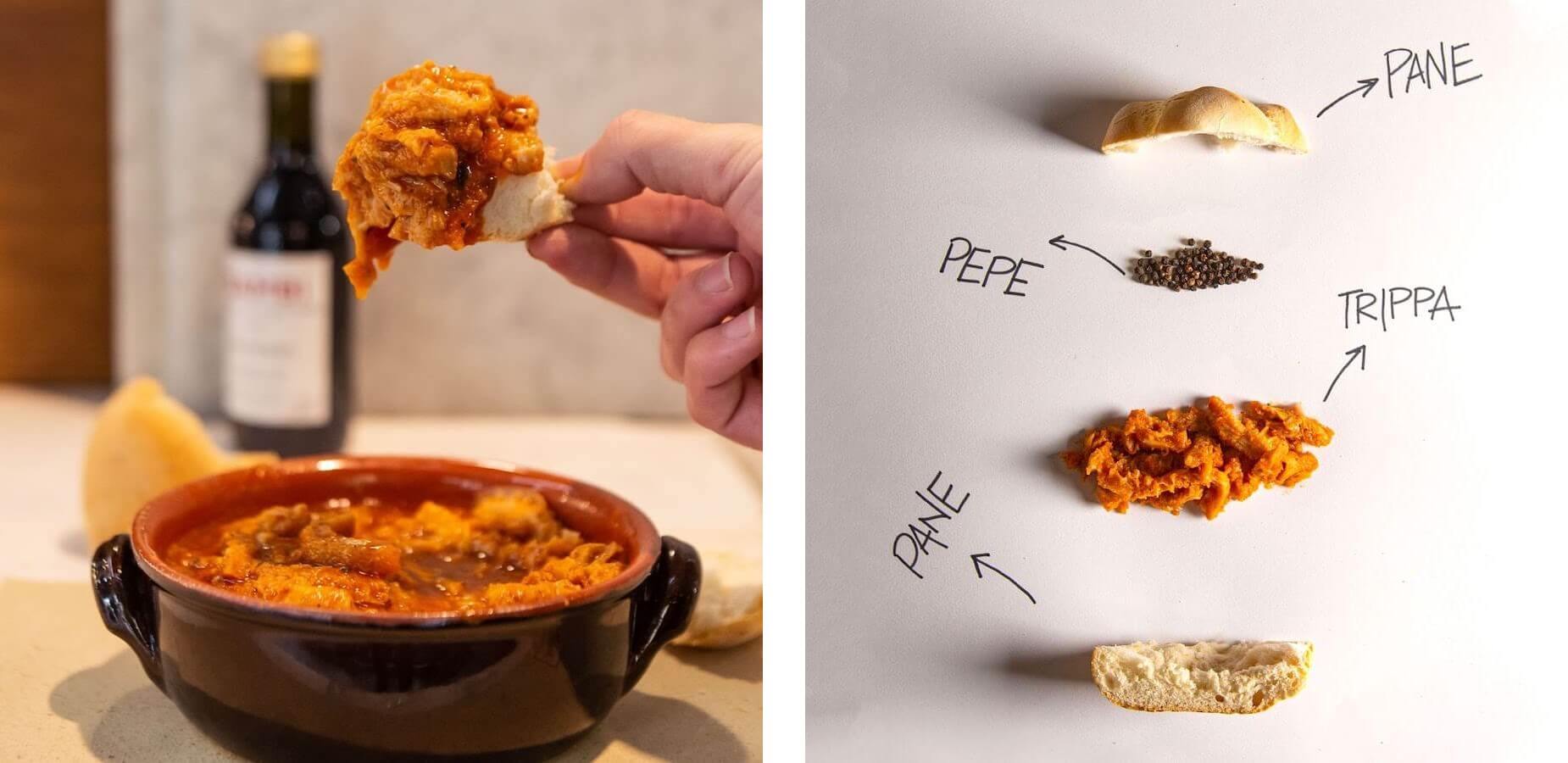
Tripe appears in many Italian regional traditions. The main ingredient may be similar, but seasonings, cooking methods and textures change considerably from one city to another.
Roman-Style Tripe
Trippa alla romana is slowly cooked with tomato and finished with Pecorino Romano and fresh mint. These two ingredients give the Roman version its rich, savoury and aromatic character.
Milanese Tripe
Milanese tripe, also known as busecca, is a traditional Lombard dish made with white beans, vegetables, broth and sage. Many versions also include pancetta. Its hearty structure makes it closer to a complete winter stew than to Florentine tripe.
Parmigiana-Style Tripe
Parmigiana-style tripe belongs to the culinary tradition of Emilia. The tripe is slowly cooked in a tomato-based sauce and finished with Parmigiano Reggiano, which adds flavour and gives the sauce a richer texture.
Neapolitan-Style Tripe
Neapolitan-style tripe is traditionally prepared with tomato and aromatic ingredients. As with many regional recipes, the exact preparation changes between families, with variations in seasonings, vegetables and finishing ingredients.
These dishes show how tripe can take on different regional identities while remaining closely connected to Italian popular cooking and the culture of making good use of every part of the animal.
Tripe can be part of a varied and balanced diet. It provides protein and iron, while its calorie and fat content as a raw ingredient is more moderate than many people expect.
However, the nutritional values of raw tripe do not represent every finished dish. Oil, cheese, bread, sauces and other ingredients can change its overall calorie, fat and salt content. Portion size, frequency of consumption and individual nutritional needs also matter.
Tripe should therefore be considered as part of the meal as a whole. The ingredient itself has a specific nutritional profile, while the recipe determines the final characteristics of the dish.

Good tripe should have a light, natural smell, never a sour, aggressive or unpleasant one. Its texture should remain clearly recognizable and hold up during cooking without becoming excessively soft, watery or mushy.
Appearance and consistency change according to the part. Rumen is firmer and more fibrous, while reticulum has its characteristic honeycomb surface and a softer bite.
Quality also depends on correct cleaning, pre-boiling, handling and storage. These steps are part of the trippaio’s work and make a real difference to both the ingredient and the finished dish.
Tripe is part of Florence’s market culture. Traditionally, it was prepared and served by trippai: specialists who knew how to select, cut and cook the different parts of the quinto quarto.
You can still experience this tradition at Bambi Trippa e Lampredotto. Our historic shop is located inside the Mercato Centrale in Florence, where we prepare tripe and lampredotto according to the knowledge passed down through our family since 1890.
You can also find us at I Gigli Shopping Center in Campi Bisenzio. In both shops, tripe is prepared according to Florentine tradition and with the experience that comes from working with these ingredients every day.

Is tripe an organ meat?
Yes. Tripe is generally classified as offal or organ meat. More precisely, it is the edible lining of the animal’s stomach compartments.
What is tripe made from?
Beef tripe comes from a cow’s stomach. At Bambi, the word mainly refers to the rumen and reticulum, known in Florence through parts such as croce, morione, basette and cuffia.
Is tripe the same as lampredotto?
No. At Bambi, tripe mainly refers to rumen and reticulum. Lampredotto is the abomasum, the fourth compartment of the cow’s stomach. They belong to the same quinto quarto tradition but are different ingredients.
Is tripe beef or pork?
The tripe discussed in this guide is beef tripe and comes from a cow. Other culinary traditions may use stomach lining from different animals, so the meaning can change according to the context.
What does tripe taste like?
Tripe has a relatively mild taste. Its defining characteristics are its texture and its ability to absorb the flavours of sauces, herbs and seasonings.
Does tripe smell bad?
No. Properly cleaned, handled and stored tripe should not have a sour or aggressive smell. A light, natural aroma is normal.
Is tripe healthy?
Tripe can be included in a balanced diet. It provides protein and iron, while the nutritional value of the finished dish also depends on its preparation, portion size and frequency of consumption.
Tripe is not one generic cut. Rumen and reticulum have different structures, textures and uses, while centopelle and lampredotto have their own distinct identities.
Knowing these differences helps you understand what you are eating and why each recipe produces a different result. For a trippaio, this knowledge is the starting point: choosing the right part, treating it correctly and giving it the time it needs.
At Bambi Trippa e Lampredotto, this has been our daily work since 1890. If you want to discover tripe through the Florentine tradition, visit us at the Mercato Centrale in Florence or at I Gigli Shopping Center.






 Lampredotto with Artichokes: A Unique Twist on a Tuscan Classic